
How to Find a Poquoson Property Owner
Ownership research has a natural sequence. First locate the parcel, then check the tax or assessment owner of record. Test that name against the recorded conveyance last. Stopping at the first name invites mistakes. A bill recipient is not always the grantee, a prior owner may still sit on the tax roll, and a company contact may not be the landowner at all.
- Search the Treasurer’s Real Estate Public Inquiry by street name, name, account number or parcel number.
- Use the matching account to identify the parcel reference and confirm it with the Commissioner or Assessor.
- Read the newest deed in the Poquoson Circuit Court Clerk’s land-record index, checking grantee, grantor and legal description.
- Compare recording date and property description with the assessment or Land Book entry.
- If an LLC, trust or estate is named, follow the public entity or probate record for context without treating it as a substitute for the deed.
This approach shows who stands in the local records for one parcel. Poquoson publishes no individual assessor-card portal online. The exact owner-field labels also stay inside city systems. Verify the field that applies to a specific property with the city offices that keep the records.
Find a Poquoson Property Owner Starting With an Address
The Treasurer's street mode is unusual. It asks for the street name without the house number. That pulls a group of accounts along one road, which helps when the exact account is unknown. Compare situs details before picking a result. Name, account-number and parcel-number searches work too. Its optional projected date affects penalty and interest only. It says nothing about title history.
The Commissioner of the Revenue maintains the parcel record for the city. That office assigns map numbers, transfers property from recorded deeds or wills, updates owner addresses and assessment changes for billing, and produces the annual Real Estate Land Book. Ask that office or the Assessor to confirm the link between a street address and its parcel identifier. Poquoson publishes no map-number syntax. Copy the identifier from an official record instead of constructing one.
The city-linked GeoPlan map can help orient a candidate parcel. A map point is an aid, not proof. Confirm ownership with the city record and the recorded deed.
Read a Poquoson Property Owner Name as a Record Clue
A tax roll or assessment owner field names a party. It is the party the city links to an account. The exact field label and update interval are not published. The Commissioner's office processes transfers from deeds or wills. It also updates owner addresses for billing. That administrative work is helpful. But a deed recording can precede a later roll or mailing update.
The owner name may be two people. It may also be a trust, an LLC, an estate or a fiduciary. Search the exact party name from the deed. Then compare the capacity: trustee, executor, administrator or corporate grantee. Virginia's SCC Clerk's Information System lists entity registrations. The local Circuit Court Clerk can identify the instrument that conveyed the parcel. A registered agent or business mailing address proves nothing about which land an entity owns.
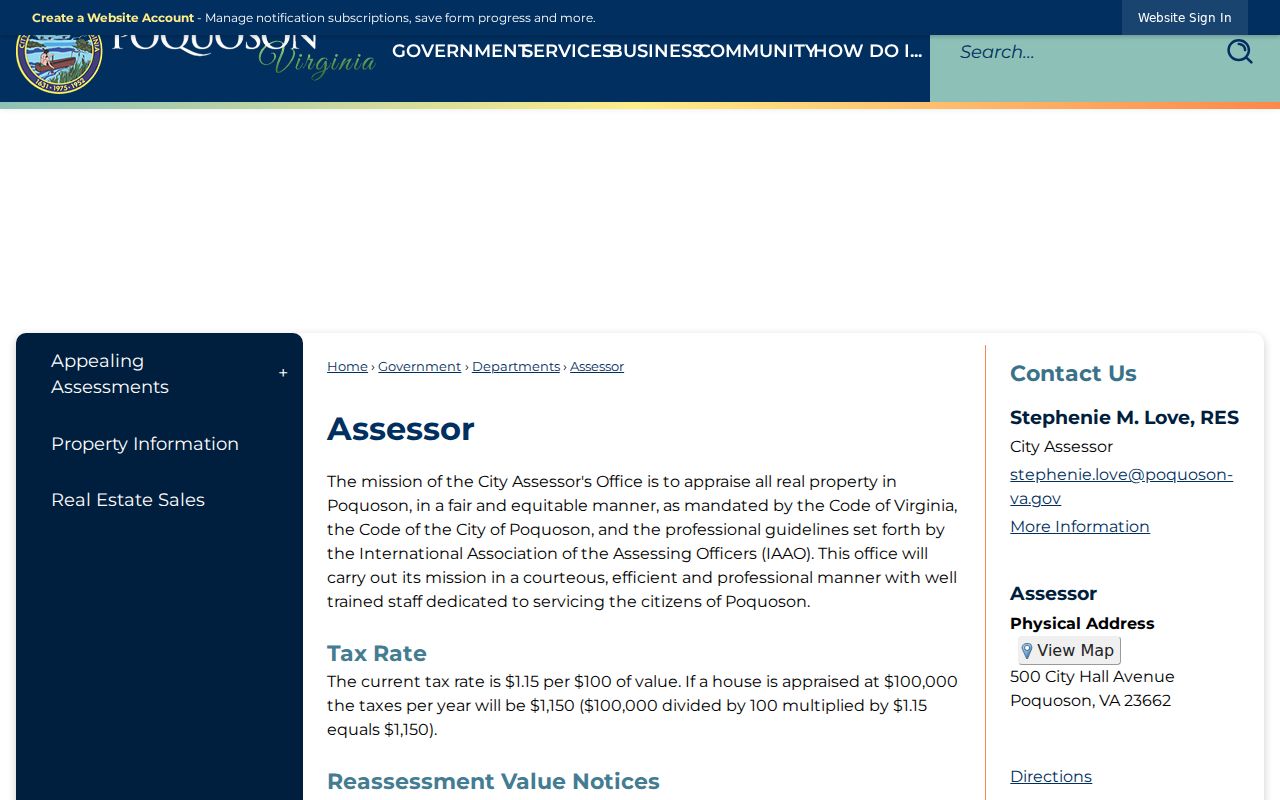
The Poquoson Assessor page links to the city's assessment and mapping resources. That official entry point is not a parcel-specific owner card. Request the assessment record when the field or effective date matters.
Confirm the person or entity against the recorded deed and its legal description first. Only then call it the present owner of record.
Confirm a Poquoson Property Owner Through the Newest Deed
The Poquoson Circuit Court Clerk is the city's deed recorder. Virginia COVERS provides remote access to circuit-court land records. Its landing page warns that remote information is not the official record. Search the party as grantee. Then compare the legal description to the target parcel. The grantor conveys the interest; the grantee receives it.
Hunt for a deed recorded after the tax account's last update. Record the instrument number or book/page reference. Note the recording date, all grantees and any vesting language. A later deed of trust is financing security, not ownership. Releases, assignments, easements and lis pendens each carry different legal effects. If the index is unclear, ask the Clerk to confirm the instrument. The Clerk can also provide a certified copy.
Poquoson became an independent city in 1975. An older link in the title chain may sit in York County-era books. Those books sit beyond the reach of a modern Poquoson search. If the current deed cites an earlier instrument, follow that reference. Search the named predecessor jurisdiction when needed.
Situs and Mailing Address for a Poquoson Property Owner
Situs and mailing address answer two different questions. Situs tells you where the parcel sits. The mailing address is where the tax notice goes. Because the Commissioner updates owner addresses for billing, the two lines can differ even on a perfectly correct record. Mail may go to a lender, a representative, a care-of contact, or an owner living elsewhere.
Never assume a mail recipient lives on the parcel. A new mailing line does not mean title changed. Match the address-based account to the land through the parcel or map number and the deed's legal description. If a current road name fails in an older search, try an alternate documented street name or a prior owner. ZIP Code 23662 is a mail clue only. It does not prove city boundaries or parcel location. For edge cases, verify delivery with USPS and locality with the city.
A tax bill can name an entity while the deed names a trustee or fiduciary. Read each name in its document role, and never treat an address field as permission to contact someone outside a legitimate property matter.
Trace an LLC, Trust or Estate Named as a Poquoson Property Owner
Poquoson deeds sometimes name a legal entity as grantee. The Virginia SCC's Clerk's Information System can show an entity's status, its principal or registered-agent details, and filed documents when available. It can also show filed documents. That context helps you interpret the name. It does not establish beneficial ownership of every parcel tied to the agent's address. Match the exact entity name to the local deed, keeping the filing context in view.
Trusts work differently. A trust appears through its named trustee. A deceased owner's interest may pass through probate, a fiduciary deed, or a court order. The Circuit Court Clerk keeps local wills, probate material, and recorded instruments. Virginia Vital Records issues certified death certificates under separate eligibility rules. A death certificate alone transfers nothing. Find the deed or court order that records the transfer, and confirm the signer's authority.
Shared ownership needs every grantee identified, along with the vesting type shown in the instrument. A tax bill name may not cover all parties. Never assume an entity's registered address is the property site.
Use the Parcel Number Across Poquoson Systems
The parcel number bridges Poquoson systems. It links the Treasurer inquiry to the Commissioner's record, the city map, and the Clerk's deed description. The city publishes no official statement of the exact Poquoson format. Copy the number exactly, punctuation and leading digits included. Keep it distinct from the taxpayer account. If systems show different identifiers, ask the city which one matches the legal parcel.
Start with the map for context. Then return to the deed and assessment documents for names and the legal description. A map may show nearby tax polygons or roads, but treat any GIS owner label as a lead rather than the transfer record. Lot geometry belongs on a recorded plat or survey. A surveyor resolves a boundary on the ground.
When money or an estate rides on the answer, keep the instrument reference, date, parcel key, and custodian response. That small audit trail pays off. It lets you ask the Clerk or a title professional a precise question.
Check a Deed of Trust or Lis Pendens Separately
A likely grantee is only part of the picture. Search the land records for deeds of trust, assignments, releases, certificates of satisfaction, judgments, mechanic's liens, easements, and lis pendens. These can bind the parcel without changing the owner. The Clerk publishes no confirmed coverage cutoff for the Poquoson online index, so confirm its exact scope before relying on it.
Know what each document does. A deed of trust secures a debt; it is not the ownership deed. A release or satisfaction records a payoff. A lis pendens signals litigation tied to the property, while the docket or filed court record supplies the procedural context. Delinquent real-estate tax liability attaches to the land under city guidance, so ask the Treasurer for current tax status during a transaction.
Serious title work belongs to a professional. A title professional checks the chain, the encumbrances, and the release status. One name search is not a lien search.
Know What a Poquoson Ownership Search Cannot Prove
A city tax search can identify a likely account and its payment history. The assessment or Land Book shows administrative ownership information. The deed is the recorded conveyance. None of them alone guarantees clear title, exposes every private beneficial interest, proves occupancy, or fixes a boundary. COVERS warns that remote data is unofficial. GIS is reference mapping, not a survey.
Virginia FOIA lets you request existing public records, subject to exemptions. Assessment cards carry a separate inspection rule under Va. Code §58.1-3331, and confidential taxpayer material stays protected. An online search may miss a card or older deed. Ask the local custodian about counter access, a written request, or historical books. The office need not draft an ownership opinion.
Lawful use. Use owner information for property research, a transaction, boundary review or civic purpose. Do not use it to stalk, intimidate or harass anyone.
For a current-owner question, have the Clerk confirm the newest deed. Have the Assessor or Commissioner confirm the parcel record. A professional title search settles any legal conclusion.
An entity named in a deed is not automatically the owner of record. To check a Virginia business or corporate name, the Virginia SCC Clerk’s Information System is the official state portal.
Go back to the Poquoson deed instrument itself. That document shows which parcel the entity actually received. The City of Poquoson service and phone directory lists the departments to call for routing questions about parcel and property records.